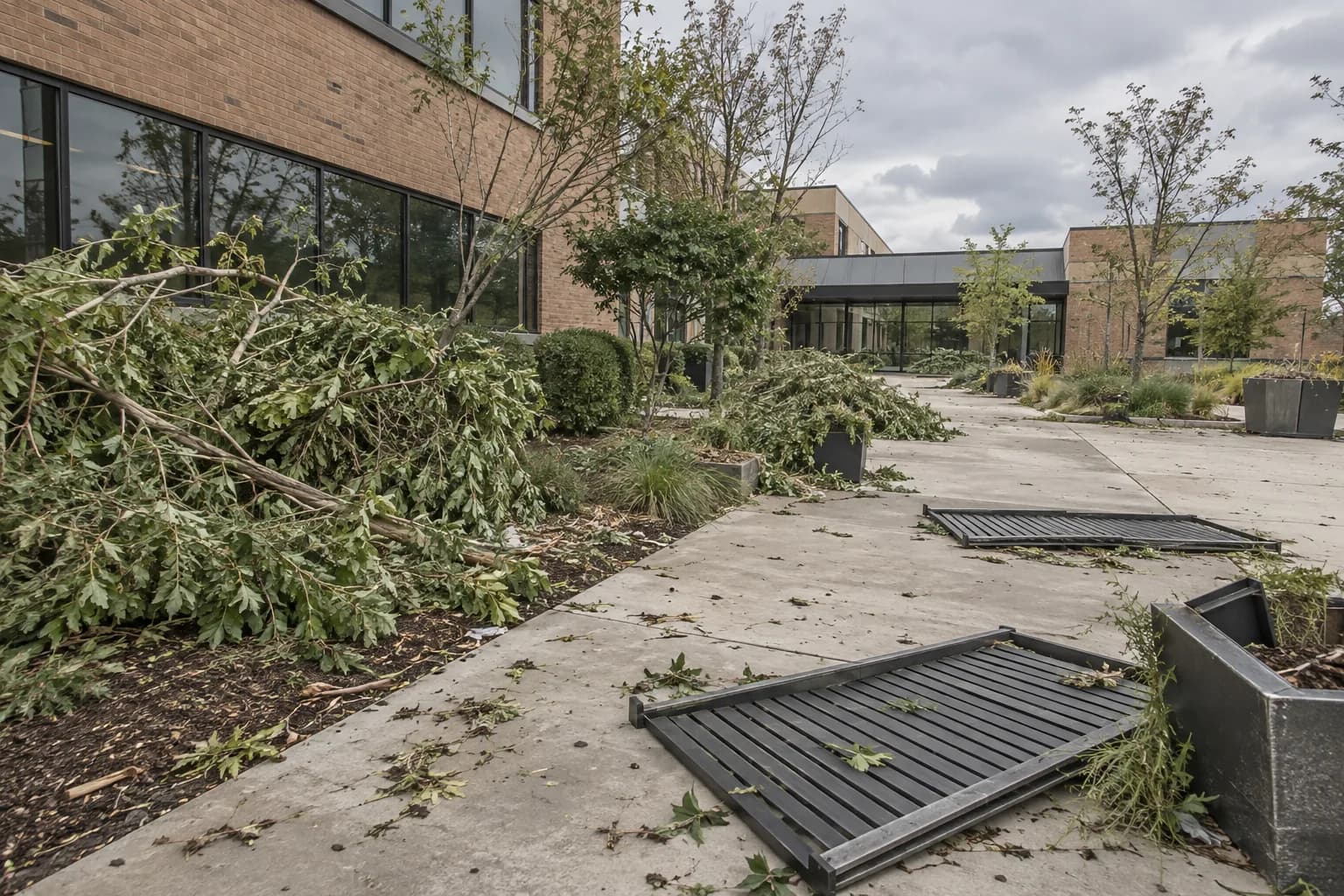
You’re standing in the driveway. The coffee has gone cold. Where do you even start?
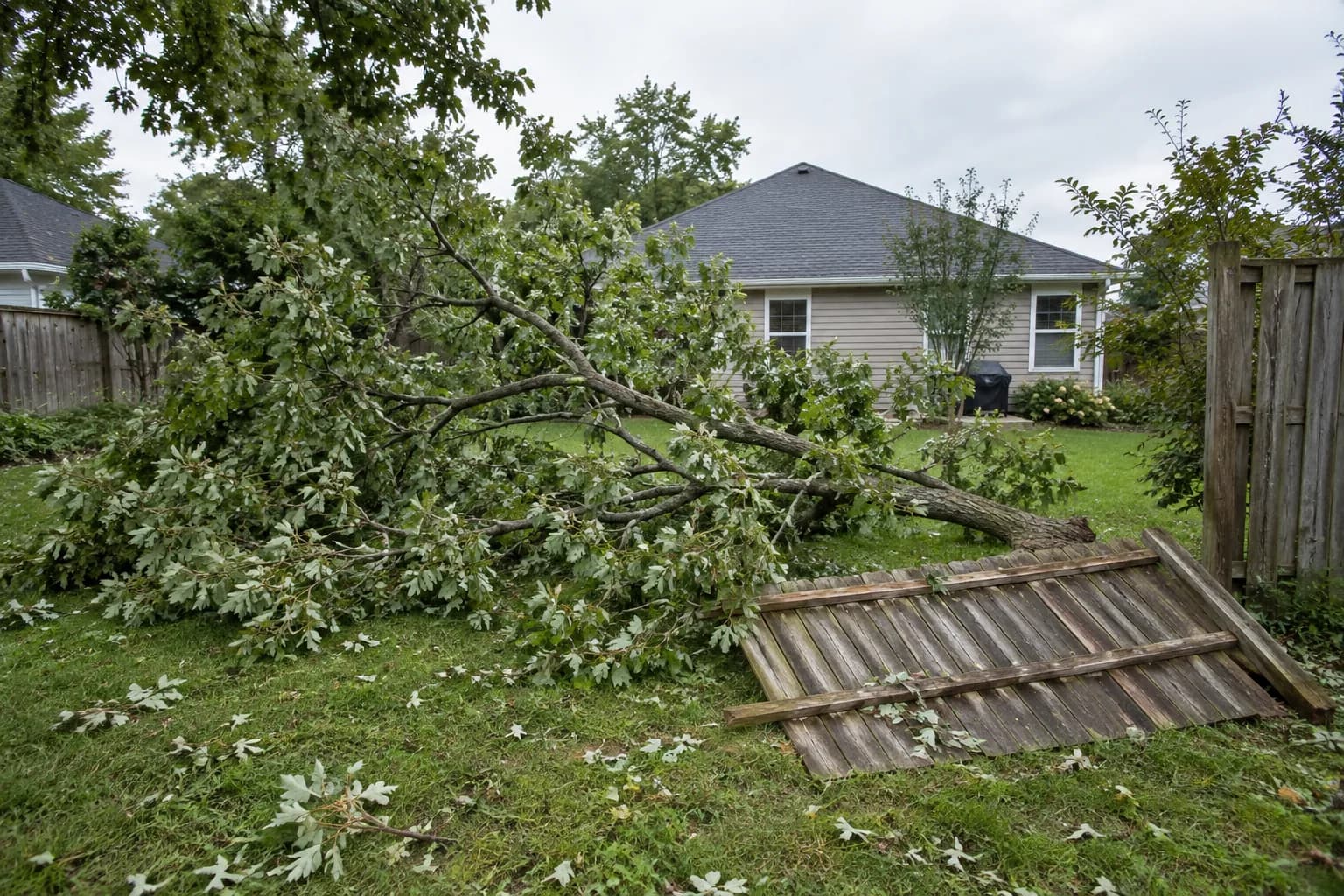
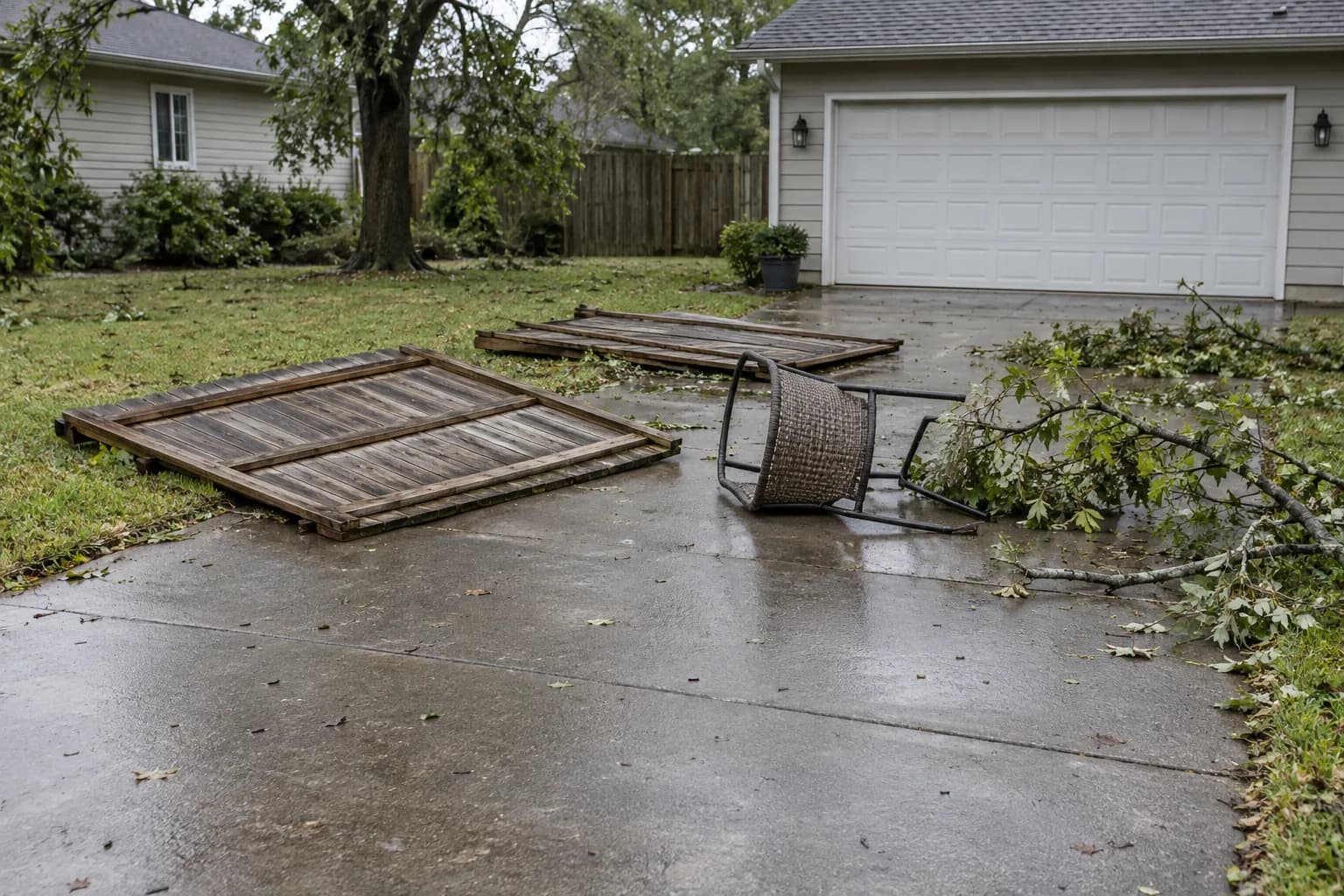
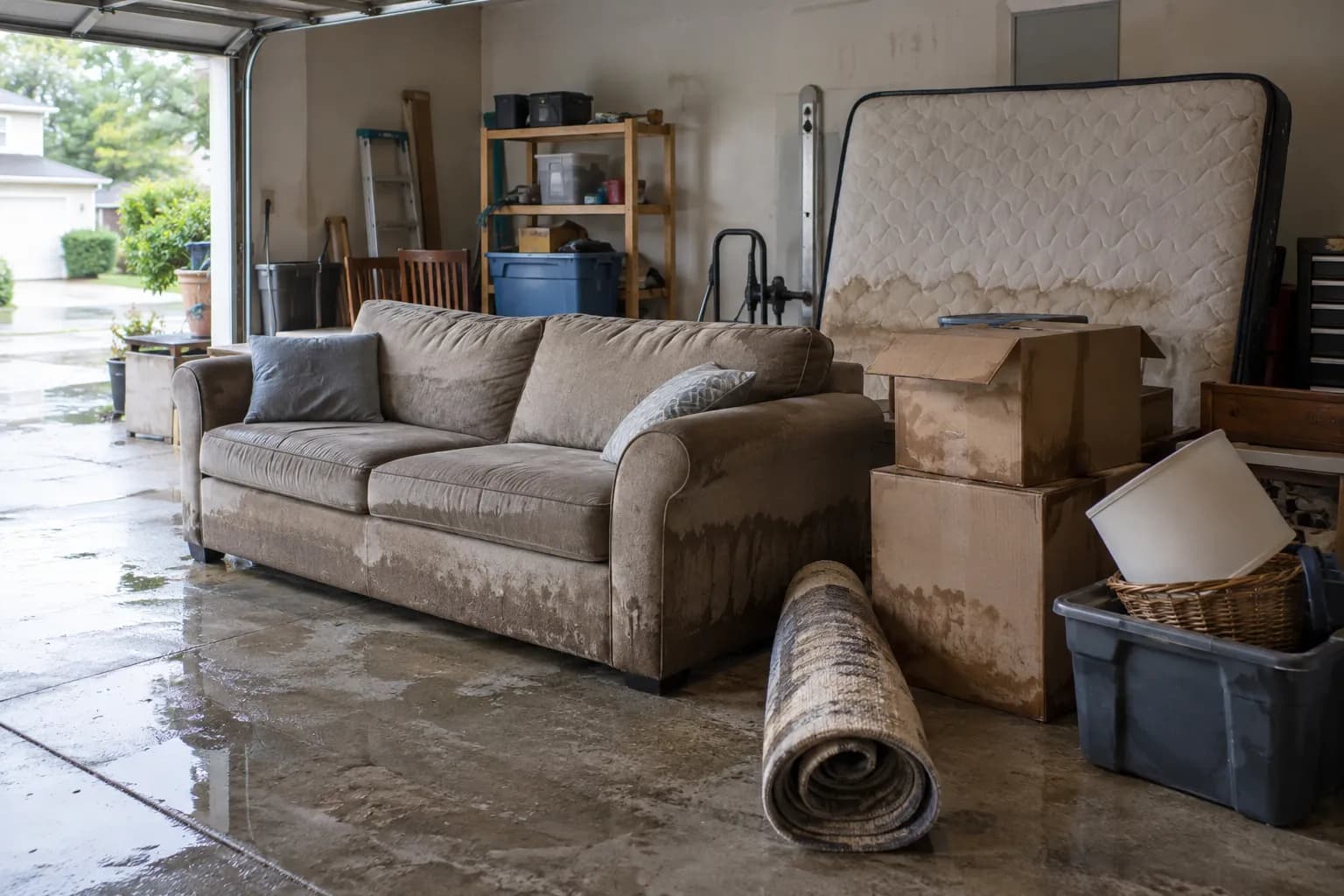
The yard is covered in fallen limbs. A section of fence is down. Inside, there’s flooded carpet and a garage full of wet belongings. The storm has moved on, but the first days afterward can feel like one long list of decisions.
You do not need to solve the whole property at once. Hurricane Junk Cleanup focuses on the debris and damaged belongings that need to leave it. Start by showing us the mess—from somewhere safe—and telling us what you want removed.
From the yard to the garage
What We Clear After a Storm
Most properties do not fit neatly into one category. You can describe several kinds of debris in the same request.
01 / What needs to go
Storm Debris and Yard Wreckage
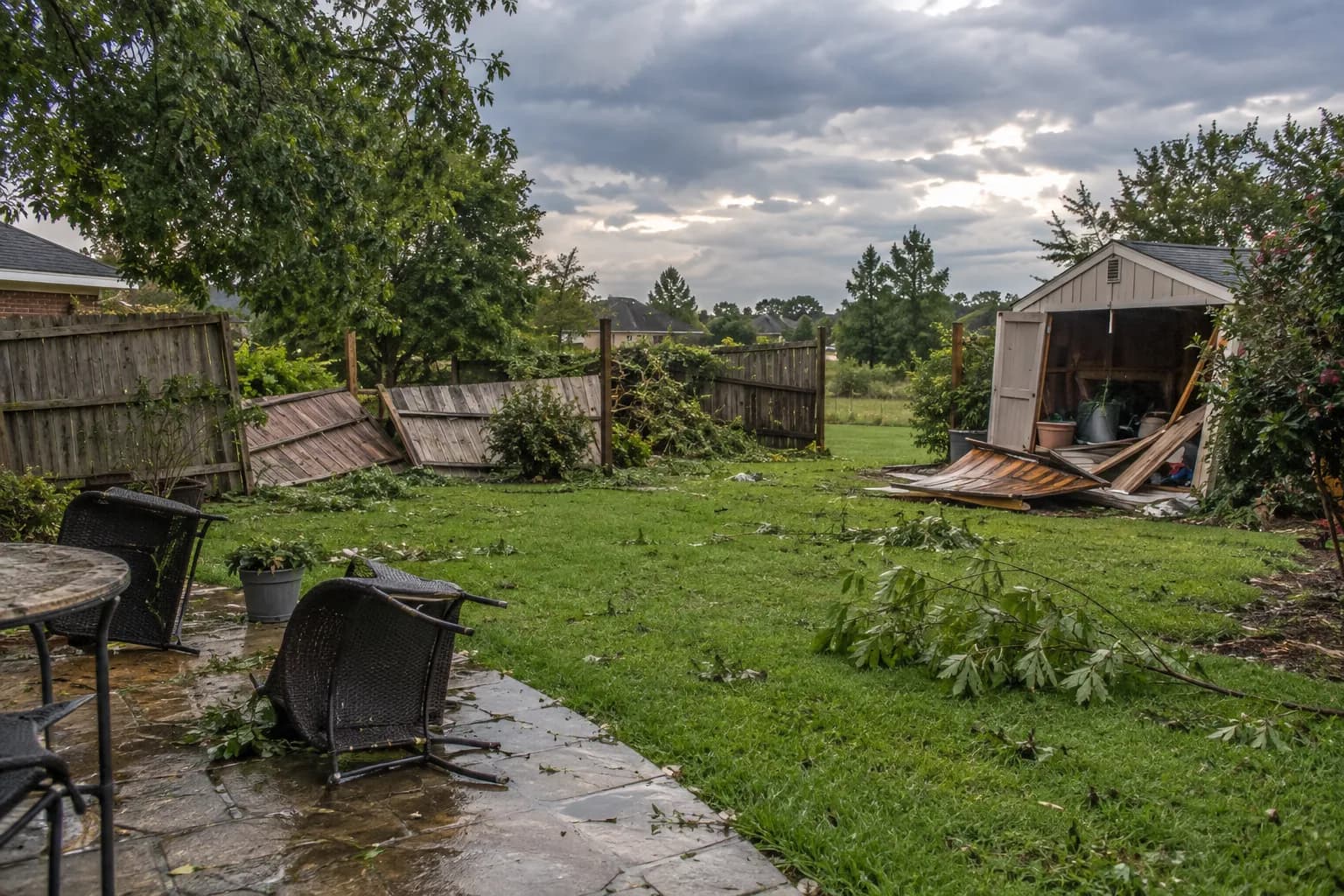
The yard you knew yesterday is under broken limbs, fencing and whatever the wind carried in. Patio chairs are on their sides. A playset is damaged. Shingles, siding and gutters may be mixed in with branches. It is not always a neat pile of one material.
Tell us about the whole mess: yard debris, detached building materials, outdoor furniture and other loose storm debris. We review safely accessible material and confirm what the job can include. A wide photo helps show the volume; a closer one helps identify what is buried in the pile. You do not need to rearrange it for the camera.
Cutting a tree and hauling away what is left are two different jobs. A tree service may finish the cutting while the lawn is still covered in branches and heavy sections. Before that work begins, ask who is responsible for taking the debris away.
We review removal requests for grounded limbs, branches, brush, palm debris and cut tree sections. Show us the largest pieces and the route to the loading area. If cutting, rigging or dangerous tree work is still needed, a qualified tree professional may need to finish that part first. A tree on a roof, a hanging limb or a power line in the debris is not an ordinary hauling job.
A soaked sectional is a different proposition from an old couch you were planning to replace. Mattresses, rugs, carpet and padding absorb water. Boxes fall apart. What used to be manageable can become heavy, awkward and hard to get through a doorway.
Show us the ruined furniture, household belongings and garage contents you need removed. Already-removed drywall or flooring can also be included in your request for review. Mention stairs, narrow halls and anything that affects access. Contents removal is separate from water extraction, structural drying, mold work or demolition of attached materials; the building must be safe to enter before hauling can begin.
A flooded washer, damaged refrigerator or garage full of wet electronics should not get lost in a general description of ‘junk.’ Name the items and send photos, including whether they are still connected. Refrigerators, freezers, air-conditioning equipment and water heaters can involve different handling requirements.
We will review the items before confirming acceptance. Connected equipment may need another professional to disconnect it safely. Appliances containing refrigerants need appropriate disposal handling; do not cut their lines or release refrigerant yourself. Acceptance and disposal options depend on the equipment and local requirements, so confirm those details when you request an estimate.
Garages tend to hold a little of everything: tools, storage boxes, spare furniture and belongings you meant to sort out later. After flooding, the bottom layer may be soaked and the rest hard to reach. A damaged shed can leave its contents mixed with loose panels, fencing and outdoor storage debris.
Tell us what is inside, what has come loose and how the area can be reached. Photos from outside are useful if the structure is damaged. Removing wet storage contents or detached debris is different from dismantling an unstable shed or collapsed carport. Structural work needs to be addressed before a removal job is arranged.
One damaged property is a lot to manage. Several rental homes, an HOA common area or a business with debris blocking access adds another layer: different tenants, contractors, priorities and people who can open the gate.
Property managers, landlords, HOAs and business owners can tell us about the affected locations together. Include which properties need attention first, access arrangements and any documentation needs you want to discuss. Our team includes a Certified Project Management Professional (PMP), bringing experience with planning and coordination to complicated cleanup needs. Scope, availability and scheduling still need to be confirmed for the actual properties.
Before you pay someone to haul debris, check what your city or county is offering. Public storm collection can be a useful option. It just may not cover the whole job you are looking at.
Public storm debris collection
Availability, cost and rules vary by location and storm. Check the current notice from your local government—not a neighbor’s recollection of the last hurricane.
Placement: collection may be curbside only. Getting material there can remain the property owner’s responsibility.
Materials: programs may require branches, household contents, appliances and building debris to be separated.
Timing: routes and collection rounds determine when a pile is reached. Confirm deadlines and placement instructions.
Eligibility: ask specifically about commercial properties, HOA areas and private roads. Rules are not the same everywhere.
Private storm debris removal
A private request starts with the actual property, not only a pile at the curb. Tell us where the debris sits and what is between it and the loading area.
Access: backyard, garage or interior removal needs to be discussed and included in the agreed scope.
Materials: describe the mix before work is confirmed; special-handling items need review.
Timing: availability and scheduling are confirmed for your location and job—not guaranteed immediately after a storm.
Cost: request an estimate for the work you need. You may decide public pickup covers some of it.
If the public program accepts your debris, you can safely meet its placement rules and its timing works for you, it may be the right choice. If not, tell us what remains.
The first 48 hours can involve urgent decisions. They are not a deadline to enter a dangerous building or move debris yourself. Follow local officials’ instructions and put safety ahead of the pile.
Photograph from a safe place.
Before removal, capture the overall damage and individual items if you can do so safely. Stay out of unstable structures and floodwater. CDC guidance on returning home explains the hazards to check first.
Ask your insurer what to keep.
Confirm documentation requirements before disposal. Ask whether flooring or other samples are needed; do not cut into contaminated or potentially hazardous material yourself. Photos alone do not establish coverage.
Make a simple belongings list.
Record damaged items and, when safely accessible, appliance model or serial numbers. Keep receipts and copies of communications. See NFIP’s flood-damage documentation guidance.
Give wet materials prompt attention—not unsafe attention.
Soaked contents may need removal, but water, contamination and building conditions can require a specialist first. Do not start unprotected demolition or enter an unsafe room to save time.
Treat refrigerator contents as a food-safety question.
Food safety after an outage depends on time and temperature. Never taste questionable food to test it. Follow USDA’s emergency food guidance; arrange appropriate handling if the appliance itself needs disposal.
Stay away from downed lines.
Keep away from fallen wires and anything touching them. Contact the utility or emergency services for immediate danger. Do not move a branch off a wire or use wet electrical equipment.
Check the people you hire.
Verify business identity, insurance and relevant licenses where required. Ask for clear written terms and understand the payment arrangement before you agree to work.
You do not need a perfect inventory to start. A description, location and a few useful photos give us something concrete to discuss.
01
Send us your request.
Tell us what needs to go. Add the property location and photos if available. Show the overall debris and the way to reach it—not just the biggest item.
02
We review the details.
We look at the materials, amount and access. Some requests need more information or a closer look before the cleanup can be estimated.
03
We confirm the work.
We discuss the estimate, what is included and the next steps before approved work begins. Tell us if conditions or the debris change.
04
The cleanup gets done.
Once the work is approved and scheduled, debris is removed according to the agreed scope. The job starts with a clear understanding of what needs to go.
Grounded branches, loose fencing and ruined furniture are one conversation. A tree hanging over a roof, damaged utilities or a building that may shift is another.
Dangerous tree removal, power-line work, structural instability, hazardous materials, mold remediation, water extraction and major structural demolition need the appropriate specialist. We focus on hauling debris and damaged belongings once access and conditions are safe.
A damaged property can make any offer of help sound appealing. Judge the business by what you can verify and what it puts in writing—not its license plate, phone number or whether someone knocked on the door.
Pressure is a reason to pause. Not a reason to sign.
“Sign right now.” Be wary of pressure that leaves no time to read, compare or ask questions.
Details you cannot verify. Check the business identity and required licenses independently. Ask for proof of insurance.
No written terms. The work, price and payment terms should be understandable. Do not sign blank documents or terms you do not understand.
Insurance promises. Verify coverage with your insurer, not a contractor who promises reimbursement.
Payment that does not match the agreement. Question unexplained demands or requests to pay everything before work begins.
Some policies include debris-removal coverage, but it depends on the policy, cause of damage, limits, exclusions and deductible. Flood insurance and homeowners insurance can cover different losses. Photograph damage when safe and ask your insurer what records are needed before disposal. We do not determine coverage or guarantee reimbursement.
Scheduling depends on current demand, your location, storm conditions, access and the amount of work. A blocked road or unsafe property can affect what is possible. Request a free estimate and include your address so we can discuss current availability. This is not an emergency-dispatch service.
We need to agree on access before work is scheduled. An outdoor debris pile and an interior cleanout can require different arrangements. Let us know about locked gates, tenants, pets and anyone who needs to approve entry. Do not assume unattended service is possible until the arrangements have been confirmed.
How is storm cleanup priced?
The amount and type of debris are only the starting point. Weight, wetness, labor, stairs, access, distance to the loading area, disposal requirements and special handling can affect the estimate. A wet mattress down a flight of stairs is not the same job as a dry one beside the driveway. Photos help us review the request; they do not guarantee a fixed price on their own.
What happens to the debris you remove?
Different materials can have different disposal requirements. Vegetative debris, household contents, building material, electronics and refrigerant-containing appliances may need separate handling. Ask about the items in your request before work is approved. If you have questions about recycling or a particular item’s destination, raise them when we review the job.
Do you work with landlords and property managers?
Yes. You can submit a request covering multiple affected properties. Include locations, the debris at each site, access contacts and priorities. Mention any coordination or documentation needs at the start so they can be discussed alongside the work.
Our team includes a General Contractor and a Certified Project Management Professional (PMP). Professionals on the team bring more than 20 years of hurricane-related work in Florida, South Carolina, North Carolina and Louisiana.
Branches in the yard. Broken fencing. Ruined furniture. A garage full of storm-damaged belongings.
What is left is heavy, wet, frustrating work. Tell us what needs to go and send a few pictures if you have them. We’ll review your request and discuss the next step.