
Storm cleanup field guide
Tree Service vs. Tree Debris Removal
Tree services handle dangerous or standing trees. Debris removal hauls away the branches and cut sections left on the ground.
Request a Free Estimate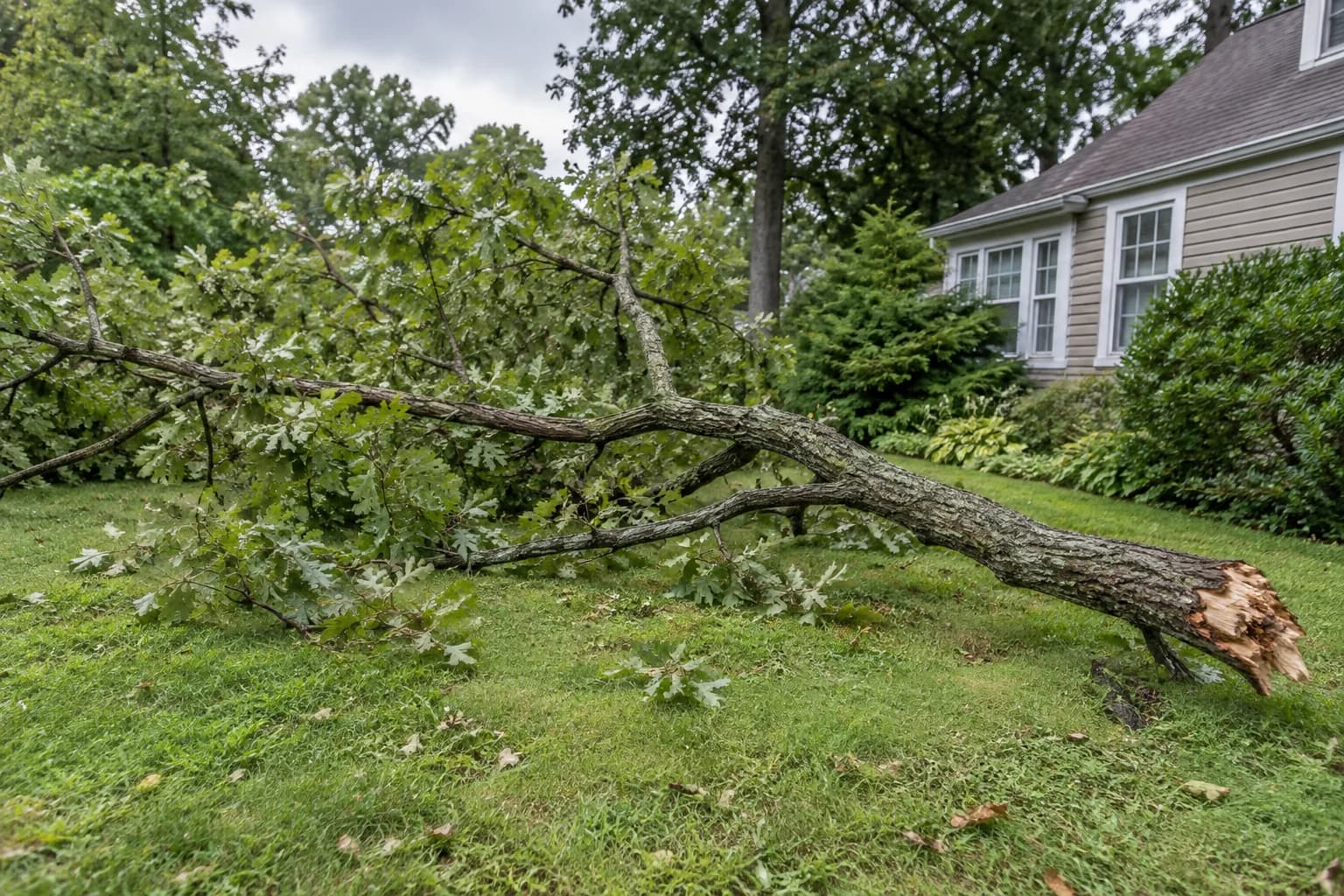
When the branches are already down
Fallen branches, cut limbs, palm fronds and brush are hauling jobs once they’re safely on the ground. If a tree contractor is cutting large sections, ask what will be left for removal.
When a tree professional comes first
A leaning tree, a limb hanging over the roof or a tree against a power line needs a qualified tree professional or utility. Debris hauling comes after that danger has been handled.
What to photograph
Photograph the whole debris area, the biggest sections and the route to the driveway from a safe place. If you can’t safely see part of the job, describe it instead.
Ask the tree contractor what will be left behind
Tree cutting and hauling aren’t always part of the same quote. Ask whether the tree contractor will remove the logs and brush or leave them for pickup. Find out where the debris will sit and how large the sections will be.
For a separate haul-away, show the largest pieces and the way to the driveway. A narrow gate, soft ground or a long carrying distance can matter as much as the size of the pile.
You don’t need to cut or rearrange debris for a photo. Describe anything you can’t safely reach. If broken fencing or other junk is mixed in, include that in the request too.
Related cleanup help
Check what needs a specialist first before entering a damaged area.
For official general safety guidance, see CDC’s disaster cleanup guidance.