
Storm cleanup field guide
Contents Removal vs. Water Remediation
Removing a ruined couch is not the same job as drying a flooded house. Here’s how to tell which help you need.
Request a Free Estimate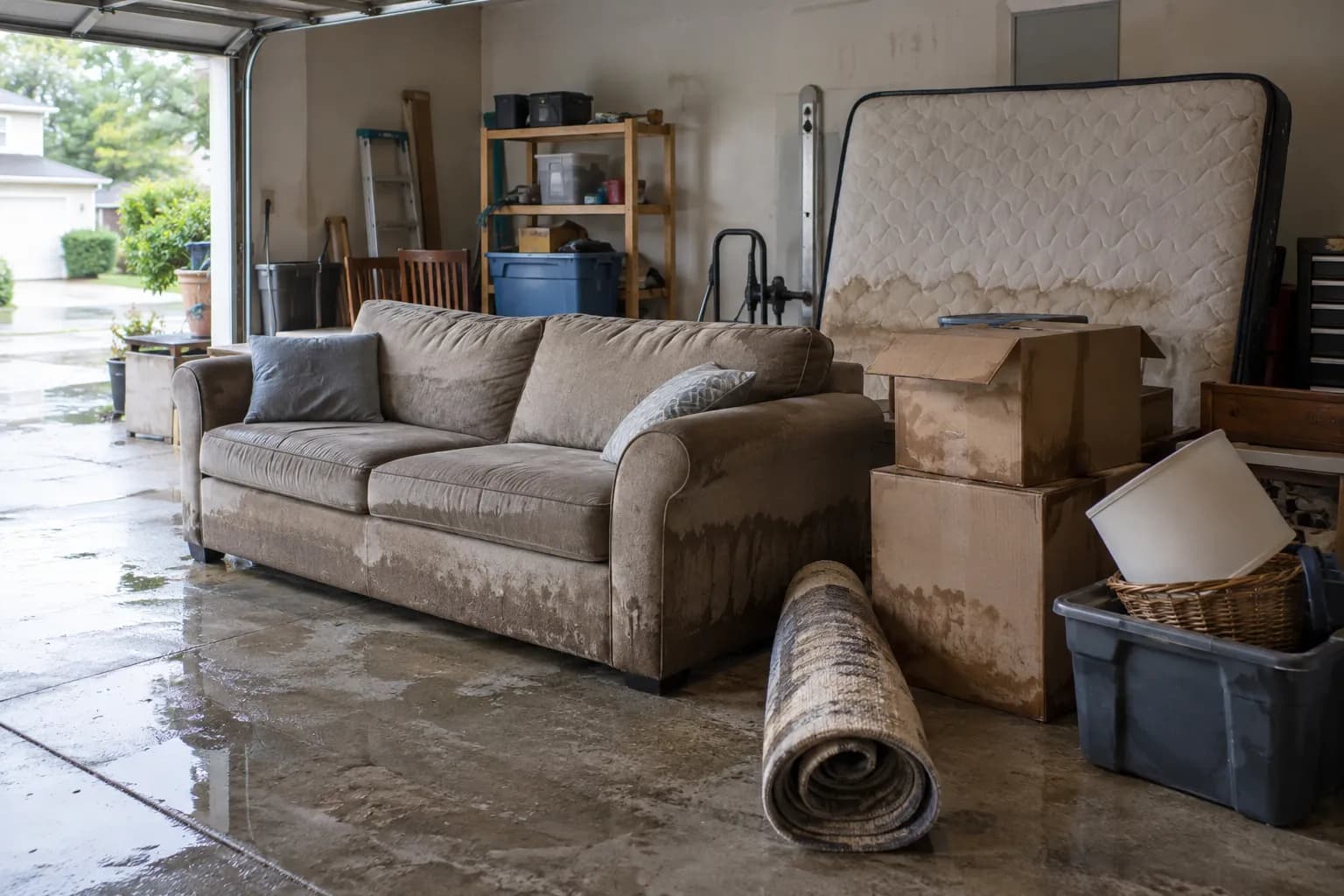
Contents removal
Contents removal means hauling out wet couches, mattresses, rugs, boxes and other damaged belongings after the property is safe to enter. The work gets unwanted items out; it doesn’t dry or repair the building.
Water remediation
A restoration or remediation contractor handles water extraction, drying, moisture and contamination. Those problems may need attention before anyone can safely remove furniture.
A practical sequence
Have electrical, flooding and structural hazards handled first. Before discarding belongings, ask your insurer what records they need. Then agree on which items will be removed and which must stay.
Decide what stays before anything leaves
Make a list of the belongings you want removed and keep it separate from anything you’re saving. If a landlord, building manager or another owner must approve disposal, get that sorted out before pickup.
Ask your insurer or adjuster which photos and records they need before belongings are discarded. Keep your own copies. Cleanup costs and coverage are questions for your insurer, not something a removal company can guarantee.
Tell the removal team about the biggest pieces, the rooms they’re in and any stairs or elevator rules. If a restoration contractor is working there too, explain who needs access first so the jobs don’t get in each other’s way.
Related cleanup help
Check what needs a specialist first before entering a damaged area.
For official general safety guidance, see CDC’s disaster cleanup guidance.