
Hurricane recovery · A property owner’s guide
The First 48 Hours After a Hurricane
What Every Property Owner Should Know Before Cleanup Begins
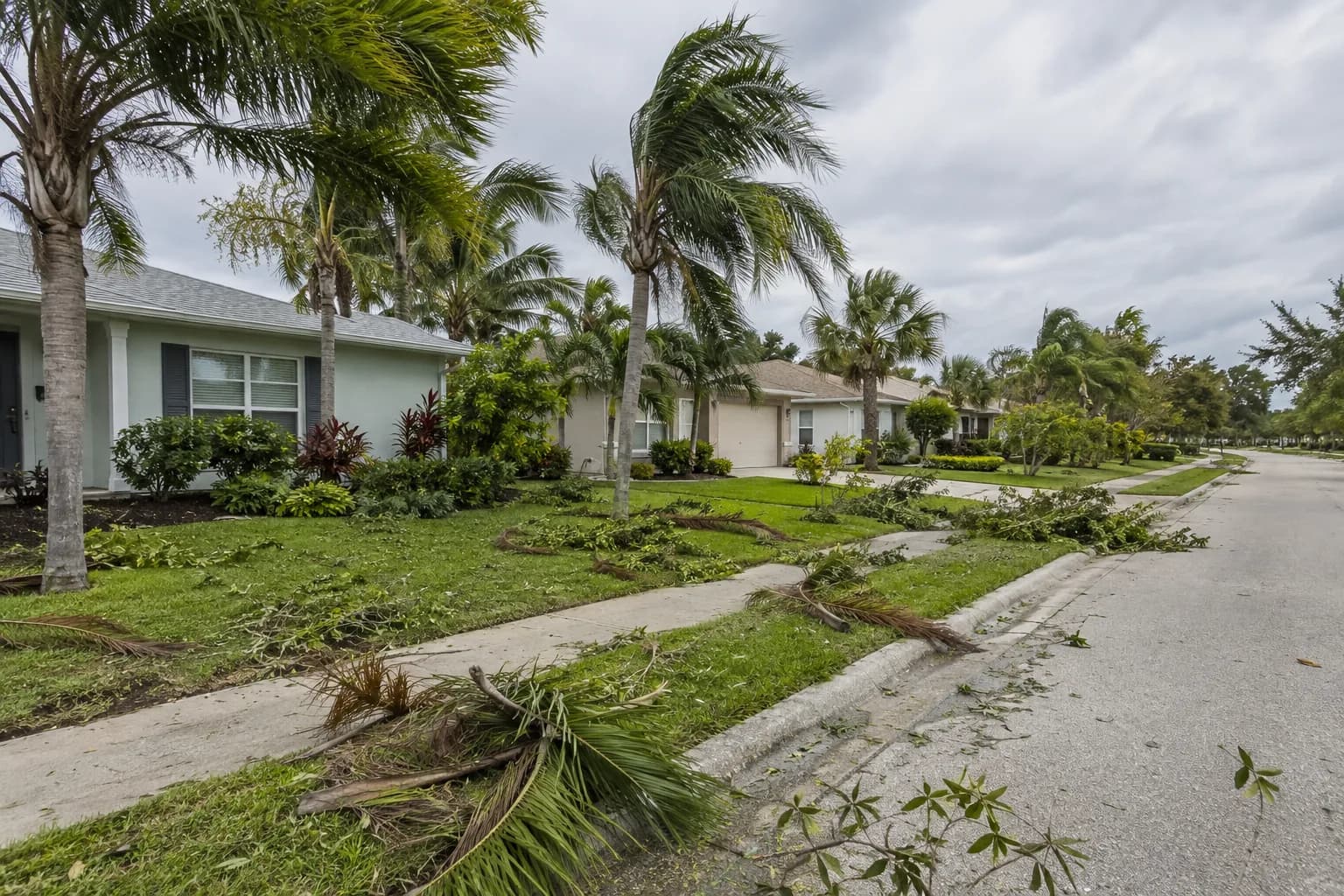
A practical guide for homeowners, landlords, business owners and families in the Carolinas, Georgia, Florida, Alabama, Mississippi and Louisiana.
The short answer: In the first 48 hours after a hurricane, work in this order: keep people safe, stop the damage from spreading, document everything, then clean up. Don't go back until local officials allow reentry. Treat every downed line and every patch of standing water as if it's energized. Run generators outside, at least 20 feet from doors, windows and vents. Photograph damage before you move anything — but don't let paperwork stop you from tarping a roof or pulling out soaked carpet, because wet materials that aren't dried or removed within 24 to 48 hours are likely to grow mold. And before you pay anyone to haul storm debris, find out what your county or parish will collect for free.
The storm leaving is not the danger leaving
Most people brace for the wind and the water. Fewer are ready for what comes after.
National Hurricane Center researchers looking at the past decade of U.S. hurricanes found that about as many people died after the storms as died from the wind and storm surge themselves. The leading causes were car crashes, accidents during preparation and cleanup, carbon monoxide poisoning, electrocution, lack of medical care, and heat. In 2020 — a brutal season along the Gulf — more people died from generator carbon monoxide than from storm surge.
That's the most important thing in this guide: almost every one of those deaths is preventable, and most of the prevention is in your hands. Cleanup can wait a day. You can't.
Here's how to work through the first two days in the right order, what can safely wait, the decisions that quietly cost people thousands of dollars, and when a job belongs to someone else.
The first 48 hours at a glance
Save or screenshot this list. These are planning windows, not deadlines. Reentry orders, flooding, darkness, heat and utility work can push any step back by hours or days. If a step isn't safe yet, it waits.
Before you return
- Wait until your county or parish lifts reentry restrictions. Barrier islands and coastal communities often reopen in phases.
- Never drive or walk into floodwater.
- Pack: photo ID, proof of address, insurance policy numbers, a charged phone and battery pack, flashlight, N95 masks, work gloves, rubber boots, safety glasses, first-aid kit, water and food.
First hour
- Look before you walk. Stay far from downed lines and anything touching them.
- Smell gas or hear hissing? Leave, then call the gas company or 911 from a distance.
- Don't go inside if the building has shifted, is sagging, or is surrounded by water.
- Leave the electrical panel alone if there's water anywhere near it.
- Start taking photos from the outside.
Hours 1–6
- Report the damage to your insurance company. Wind and flood are usually separate policies with separate claims.
- Photograph and video every room, every side of the house, and every water line before moving anything.
- Start a running log of calls, names, claim numbers and expenses.
Hours 6–12
- Sort every problem into one of four groups: emergency, needs a professional, fix soon, can wait.
- Make reasonable temporary repairs — tarp the roof, board the windows — after you photograph the damage.
- Keep samples of wet carpet and flooring for the adjuster.
Hours 12–24
- Check your local debris pickup rules before you build a single pile.
- Separate debris by type. Keep piles clear of roads, drains, hydrants, meters and utility boxes.
- Set hazardous items aside: fuel, paint, pool chemicals, propane, batteries.
Hours 24–48
- Get written estimates. Don't sign under pressure or pay large amounts upfront.
- Verify licenses where the work requires them, and ask for proof of insurance.
- Keep every receipt, and line up electrical, structural and roofing inspections where needed.
Before you return to your property
The wind drops long before the hazards do. Rivers can crest a day or two after landfall — inland flooding often arrives after the sun comes out. Trees that rode out the storm can fall the next afternoon. And power lines can be re-energized without warning as crews bring the grid back.
Wait for official reentry
Evacuation orders and reentry restrictions exist because officials know about washed-out roads, gas leaks and live lines you can't see from your car. Get updates from your county or parish emergency management office and your state emergency management agency (listed at the end of this guide), not from social media.
Many coastal and island communities in this region reopen in phases — residents first, then contractors and visitors — and some use reentry passes or checkpoints. Keep your ID, proof of address and any required pass in the car.
Hazards you can see from a safe distance
- Downed power lines. Assume every line is live, including lines lying in water and lines that look like phone or cable wires. Anything a line touches — a chain-link fence, a puddle, a tree, a car — can carry current. Stay well back and report it to your electric utility.
- Floodwater. The National Weather Service warns that 6 inches of moving water can knock an adult off their feet, 12 inches can float a small car, and 18 to 24 inches can carry away most vehicles, including SUVs. You can't tell whether the road under the water is still there. Turn around.
- Hanging limbs and leaning trees. Broken limbs caught high in a tree can drop with no warning. Pines and oaks with lifted roots or split trunks may come down in the next breeze, especially in soaked ground.
- Obvious structural damage. A house shifted on its foundation, a sagging roofline, bowed walls, a porch pulling away, or a manufactured home that has moved off its piers or lost its tie-downs.
- Wildlife. Floods push snakes, fire ants, rodents and — in coastal Louisiana, Florida, Georgia, the Carolinas and the Gulf Coast — alligators into yards, garages and debris piles. Fire ants can form floating mats on floodwater and cling to anything they touch. Watch where you step and reach, and never reach blind into a pile.
Hazards you can't reliably judge yourself
- Whether a building is safe to enter. A crack in a foundation or a load-bearing wall may look minor and not be. That's a call for a building official or structural engineer.
- Gas leaks. If you smell rotten eggs or hear hissing, leave right away. Don't flip switches, use a lighter, or start a car nearby. Call the gas company or 911 from a distance.
- Electrical systems that got wet. Breakers, outlets, wiring and appliances that sat in water can look fine and still shock someone or start a fire days later. Saltwater from storm surge is especially corrosive.
- What's in the floodwater. The EPA advises treating floodwater as if it contains sewage and chemicals. You can't tell by looking, and you can't tell by smell.
Generators and carbon monoxide
Carbon monoxide has no color and no smell. It's one of the leading killers after hurricanes in this region, and nearly every case is preventable.
- Run a generator outdoors only, at least 20 feet from doors, windows and vents, with the exhaust pointed away from any building.
- Never run one in a garage, carport, basement, crawlspace or on a porch — not even with the doors open.
- Never cook with a grill, camp stove or charcoal indoors.
- Put a battery-powered carbon monoxide alarm where people sleep.
- Never plug a generator into a wall outlet. Backfeeding can electrocute line workers down the street. Use heavy-duty outdoor extension cords or a transfer switch installed by an electrician.
- Shut the generator off and let it cool before refueling.
If anyone feels dizzy, nauseated, confused or suddenly exhausted while a generator is running, get everyone into fresh air and call 911.
Plan for the heat
Hurricane season runs into late fall, and the days after a storm are often hot and humid with no power and no air conditioning. Post-storm heat deaths are a recognized category in National Hurricane Center data. Start work early, take breaks in the shade, drink water before you're thirsty, and check on older neighbors and anyone with medical equipment that needs power.
What to bring
Photo ID and proof of address; insurance policy numbers and your agent's phone number; a charged phone and battery pack; a flashlight (not candles); N95 masks; heavy work gloves; rubber boots; safety glasses; a first-aid kit; drinking water and food; hand sanitizer; trash bags; a notebook and pen; and a tape measure.
The first hour: what to do before touching anything
The goal of the first hour isn't to fix anything. It's to find out what's dangerous and keep everyone away from it.
A safe first walk-around
- Stop at the edge of the property. Look up first: overhead lines, the service line to the house, the electric meter. If anything is down or sagging, stay out of the yard and call the utility.
- Smell and listen. Gas odor or hissing means leave and call from a distance.
- Walk the outside slowly. Look for leaning trees, hanging limbs, shifted walls, collapsed porches, missing roof sections, and standing water against the foundation.
- Decide whether to go in. Stay out if the building has moved, walls or ceilings are sagging, water is still standing inside, or you smell gas. Wait for a building official, the fire department or a qualified professional.
- If you go in, go in daylight. Wear boots, gloves and eye protection, and carry a flashlight. Watch the floor and the ceiling — soaked drywall ceilings can collapse without warning.
- Leave the electrical panel alone if there's water near it or you're standing in water. If the house flooded, keep the power off until a licensed electrician inspects it, even if the utility restores service to your street.
- Take photos as you go. The record starts from the street, before you move anything.
Call for help right away when
- Someone is hurt or trapped — 911.
- You suspect a gas leak — gas company or 911, from a safe distance.
- A line is down, sparking, or tangled in a tree — electric utility (911 if there's fire or immediate danger).
- A building looks like it could collapse — fire department or local building department.
- A water or sewer line is broken — your water utility.
Things that make a dangerous situation worse
- Flipping breakers or plugging things in "to see if it works."
- Cutting a tree that's resting on a line, sitting on the house, or bent under tension.
- Climbing onto a damaged roof. Falls are one of the recognized causes of deaths after hurricanes.
- Working alone, after dark, or through the hottest part of the day without breaks.
- Letting children or pets play in floodwater or on debris piles.
First-hour checklist
Hours 1–6: document the damage before cleanup
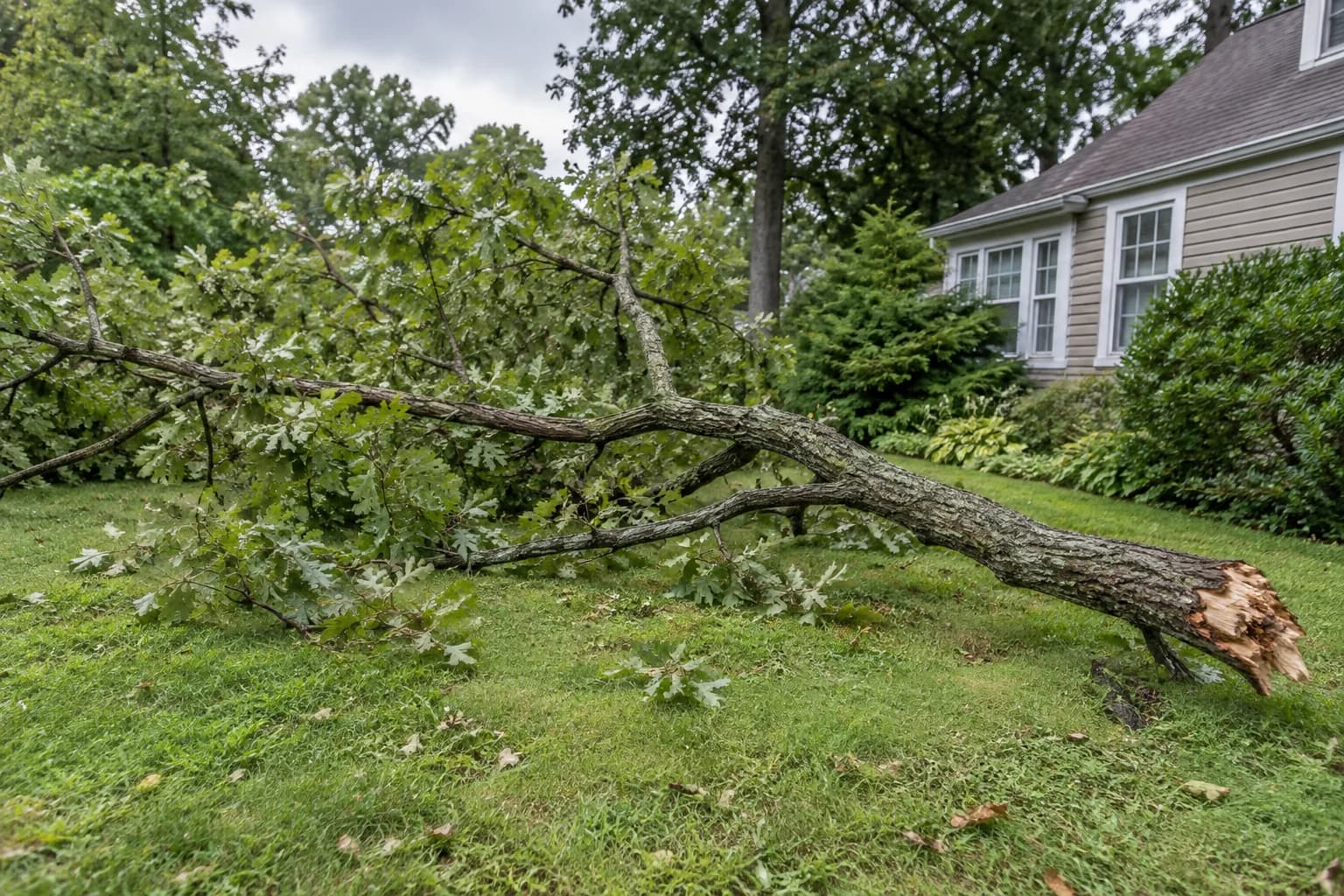
Photos don't guarantee a claim gets paid — your policy language decides that. What good documentation does is make your loss hard to dispute and easy to understand for an adjuster who may not reach you for days or weeks, long after the debris is gone.
Report the claim early
Call your insurance company or agent as soon as you can, even before you know how bad it is. Most policies require prompt notice. Things to know before that first call:
- Wind and flood are usually two different policies. A standard homeowners policy generally doesn't cover flooding or storm surge. If you have flood insurance through the National Flood Insurance Program (NFIP) or a private flood carrier, report the loss to that company separately.
- You probably have a hurricane deductible. All seven states covered here allow percentage-based hurricane or named-storm deductibles, usually 1% to 5% of your home's insured value and sometimes higher on the coast. On a home insured for $300,000, a 2% deductible means the first $6,000 is yours. Check your declarations page so the number doesn't surprise you.
- Flood claims have a hard deadline. The standard NFIP policy requires a signed proof of loss within 60 days of the flood. Ask about it on your first call.
- Florida has a one-year notice rule. Under Florida law, notice of a new or reopened property insurance claim must reach your insurer within one year of the date of loss. Report long before that; a claim noticed after the deadline can be barred.
- Your car is a separate claim. A vehicle flooded in your garage is usually an auto insurance claim, not a homeowners claim.
- Write everything down. Date, time, name, and claim number for every conversation.
Photograph and video in this order
- The whole property from the street and from each corner, so the damage has context.
- Every side of every building: roof (from the ground — don't climb a damaged roof), siding, windows, doors, fences, sheds, docks, pools and outdoor equipment.
- Every room, first with a slow, narrated video walk-through, then with still photos of each wall, ceiling and floor.
- The water line. Hold a tape measure against the wall from the floor up to the stain line so the height is readable. Do the same outside on the foundation, garage door or fence.
- Close-ups of specific damage: ceiling stains, cracked drywall, buckled floors, exposed insulation, broken glass.
- Belongings before they go to the curb: furniture, mattresses, rugs, electronics, appliances (with brand and model plates when you can reach them safely), clothing, tools.
- Trees and debris: where they fell, what they hit, and what they're blocking.
Turn on your phone's date and location stamp if it has one. Back up the files the moment you get a signal — upload them to cloud storage or text them to a family member.
Start a running inventory
You don't need a finished list on day one. Open a note or spreadsheet with five columns: room, item, rough age, rough cost, and whether you have a photo or receipt. Add to it as you clean. Bank statements, credit card statements, online order history and old family photos will help you fill gaps later.
Keep samples and receipts
The NFIP specifically recommends keeping samples of flood-damaged materials for the adjuster. Cut a hand-sized piece of carpet and pad, keep a plank of flooring and a strip of baseboard, then bag and label them.
Keep every receipt from the start: tarps, plywood, fuel, generator rental, fans, dehumidifiers, hotel nights, meals while you're displaced, and every contractor invoice.
Documenting is not a reason to wait
This is where people get stuck: If I clean up, will I hurt my claim? If I wait, will the damage get worse?
The answer, consistent with guidance from the National Association of Insurance Commissioners, is photograph first, then protect. Take reasonable steps to keep the damage from spreading — tarp the roof, board the windows, get soaked carpet and drywall out — and keep the receipts. Insurers typically reimburse reasonable temporary repairs as part of a covered claim, and most policies expect you to prevent avoidable additional damage. In this climate, a week of waiting with wet drywall in the walls usually makes the loss bigger, not easier to prove.
What to avoid: permanent repairs before the adjuster has seen the damage, and throwing away the only evidence of a damaged item before you've photographed it. When in doubt, call your insurer and ask: "I need to remove these wet materials now to prevent mold. What do you need from me before I do?" Write down the answer and the name of the person who gave it.
Hours 6–12: decide what needs attention now
Not every problem in front of you is urgent, and treating them all as urgent is how people get hurt and spend money in the wrong order. Sort everything you see into four tiers.
The hurricane cleanup priority matrix
1 — Stop. Get emergency help.
- What it means
- A threat to someone's life right now
- Real examples
- A line down on the property or touching a tree, fence or water; gas smell; someone hurt or trapped; fire; a building that's actively shifting
- Who handles it
- 911, the electric or gas utility, the fire department
2 — Don't touch it until a qualified pro looks at it.
- What it means
- A hazard you can't safely judge or fix
- Real examples
- A tree on the house or roof; any tree near a power line; a sagging ceiling or roofline; foundation movement; an electrical panel, outlets or wiring that were underwater; damaged materials in an older home that may contain asbestos or lead paint; a flooded septic system or private well
- Who handles it
- Arborist or line-clearance crew, structural engineer or building official, licensed electrician, licensed abatement contractor, health department
3 — Handle promptly once it's safe.
- What it means
- Damage that gets worse every hour
- Real examples
- A roof opening or broken windows letting rain in; wet carpet, pad, drywall and insulation; soaked mattresses and upholstered furniture; a refrigerator full of spoiled food; debris blocking your driveway or a storm drain on your lot
- Who handles it
- You, carefully — or a roofer, water-mitigation company, or a debris removal and clean-out company
4 — Schedule it for later.
- What it means
- Real damage, no urgency
- Real examples
- Fence sections down (unless you need them for pets or a pool); limbs scattered across the yard; damaged sheds and patio furniture; landscaping; cosmetic exterior damage
- Who handles it
- You, on your own schedule, or a hired crew once the urgent work is done
Situations people often misjudge
- A tree across the driveway is Tier 3 if it's lying flat, clear of lines and not under tension. The moment it's touching a line, resting on a structure, or bent under load, it's Tier 2. Wood under tension can spring back with enough force to kill.
- A hanging limb over your front walk is Tier 2, even if everything else in the yard is simple pickup. Use another door until it's down.
- A flooded refrigerator or freezer is Tier 3 for the food inside, but don't plug the appliance back in. Many appliances that sat in floodwater need to be replaced, and the ones that don't still need to be checked first.
- Debris piled against your electric meter, transformer box or gas meter isn't yours to pull out if it's tangled with the equipment. Call the utility.
- A manufactured home that shifted — even a few inches off its piers — is Tier 2. Stay out until it's been inspected.
- Wet drywall and carpet feel like a weekend project. In Gulf and Southeast heat and humidity, they're Tier 3: the CDC's window for drying or removing wet materials is 24 to 48 hours before you should assume mold is growing.
Hours 12–24: make a safe cleanup plan
By now you know what's dangerous, what's documented and what's urgent. Before anyone starts hauling, spend thirty minutes on a plan. It can save days of work and a lot of money.
Find out how your community is collecting debris
After a declared disaster, many counties, parishes and cities run curbside storm debris collection, often with state and federal help. FEMA's general rule is that clearing debris from private property is the owner's responsibility — but residents are frequently allowed to move storm debris to the public right-of-way for a limited time so government crews can pick it up.
The rules change from place to place and storm to storm. Before you build a pile, check your county or parish emergency management website, your city's website or social media, local news, or the 311 line for:
- Whether storm debris collection is running in your area, and when the last pass is scheduled.
- Where piles are allowed — usually the strip between the sidewalk and the street, without blocking the road.
- What crews will and won't take. Bagged debris and ordinary household trash are often excluded.
- Whether debris placed at the curb by a hired contractor is accepted, or only debris placed by residents.
- Separate pickup dates for appliances, electronics or hazardous waste.
If your street is in a gated community or HOA with private roads, public crews may not come in. Ask your association what it has arranged.
Sort debris as you go
After hurricanes across the Southeast, FEMA and state agencies have asked residents to separate storm debris into six piles:
Vegetative
- What goes in it
- Limbs, logs, leaves, shrubs
- Why it matters
- Usually ground into mulch. Lumber or trash mixed in can get the whole pile skipped.
Construction and demolition
- What goes in it
- Drywall, lumber, carpet and pad, flooring, shingles, furniture, mattresses
- Why it matters
- Most of what comes out of a flooded home goes here.
Large appliances ("white goods")
- What goes in it
- Refrigerators, freezers, washers, dryers, stoves, water heaters, AC units
- Why it matters
- Refrigerants need special handling. Tape or tie doors shut so children can't climb inside.
Electronics
- What goes in it
- TVs, computers, phones, stereos
- Why it matters
- Often collected on a separate schedule.
Household hazardous waste
- What goes in it
- Gasoline, oil, paint, pesticides, pool chemicals, cleaners, batteries, propane tanks
- Why it matters
- Never mix it into another pile. Keep it apart and labeled.
Normal household trash
- What goes in it
- Spoiled food, paper, packaging
- Why it matters
- Usually goes out with regular garbage, not storm debris.
A mixed pile slows collection for your whole street, may be passed over, and can turn a free municipal pickup into a paid private haul.
Where piles should not go
Keep debris off the road and sidewalk, and away from storm drains, ditches and culverts, fire hydrants, mailboxes, water and gas meters, utility poles, transformer boxes and the base of trees. Don't stack it under low-hanging lines. Collection crews use trucks with long mechanical arms, and anything close to a pile can get damaged — and a pile over a storm drain can flood your street in the next rain.
Materials that need special handling
- Older homes and buildings. The EPA notes that older structures may contain asbestos in some siding, roofing, flooring, pipe insulation and textured ceilings, and that homes built before 1978 are likely to contain lead-based paint, which can flake after soaking. If materials like these are damaged and need to come out, contact your state or local health or environmental agency first. Asbestos and lead work is regulated; it isn't ordinary debris removal.
- Flood-soaked materials. The CDC advises drying or removing wet items within 24 to 48 hours. Porous materials that can't be thoroughly cleaned and dried — carpet pad, mattresses, upholstered furniture, insulation, and drywall below the water line — usually can't be saved. Wear an N95 mask, gloves and eye protection while you handle them.
- Mold. If mold covers a large area (the EPA uses about 10 square feet as the point where professional help is appropriate), or if anyone in the home has asthma, a lung condition or a weakened immune system, bring in a mold remediation professional.
- Fuel, propane and chemicals. Propane tanks, gas cans and pool chemicals that floated loose can leak or react. Don't puncture, burn or bury them. Follow your local hazardous waste instructions.
- Sharp and unstable debris. Nails, broken glass and twisted metal roofing cause many cleanup injuries. Wear boots with solid soles and thick gloves, and keep a first-aid kit close.
- Septic systems and private wells. Common in rural parts of all seven states. If either flooded, don't use the septic system until it's been checked, and don't drink well water until it's been tested; your county health department can tell you how.
Chainsaws and tree work
Cleanup accidents are one of the leading causes of deaths after hurricanes, and chainsaws are a big part of that. If you're running one yourself:
- Cut only wood that's on the ground, clear of lines, and not bent or pinned under tension.
- Wear chaps, eye and hearing protection, gloves, a helmet and boots.
- Keep everyone else well back — at least 30 feet from someone cutting up a fallen tree, per Alabama's public health department.
- Never cut above shoulder height, from a ladder, or alone.
- OSHA limits tree work within 10 feet of a power line to trained line-clearance tree trimmers. Treat that as your line too.
Interior clean-outs: what to know before the first armload goes out
In a flooded or rain-soaked home, the interior clean-out is where most of the work is — and where most of the evidence is.
- Photograph and video every room first, including inside closets and cabinets.
- Note what's coming out on your inventory, room by room.
- Set aside samples of carpet, pad and flooring for the adjuster.
- Separate salvageable items — hard, non-porous things you can clean and disinfect, and anything irreplaceable you want to try to save — from what can't be saved.
- Move wet porous items out fast: carpet and pad, mattresses, upholstered furniture, soaked cardboard and paper, and anything else that won't dry within a day or two.
- Sort as it comes out — construction and demolition debris, appliances, electronics and hazardous items in their own piles.
- Open the house up to dry with fans and dehumidifiers once it's safe to use power, or bring in a water-mitigation company to dry the structure.
It's heavy, fast-moving and emotional work, especially in a family home. Plan for help, plan for breaks, and plan for the heat.
Ordinary debris removal vs. specialized work
A debris removal and junk removal company loads, hauls and properly disposes of storm debris: limbs and trees that are already on the ground, interior clean-outs of flood- and storm-damaged contents, wet carpet and drywall that's been removed, ruined furniture and appliances, fencing, sheds and general property cleanup.
That's different from work that requires other trades and licenses:
- Tree removal from a house or near power lines — arborists and line-clearance crews.
- Structural demolition — licensed contractors, usually with a permit.
- Electrical, gas and plumbing repairs — licensed tradespeople.
- Drying the structure itself — water-mitigation and restoration companies with moisture meters and drying equipment.
- Mold remediation — remediation professionals, licensed in some states.
- Asbestos and lead abatement — licensed abatement contractors.
An honest debris hauler will tell you up front which of these it doesn't do.
Hours 24–48: start recovering without expensive mistakes
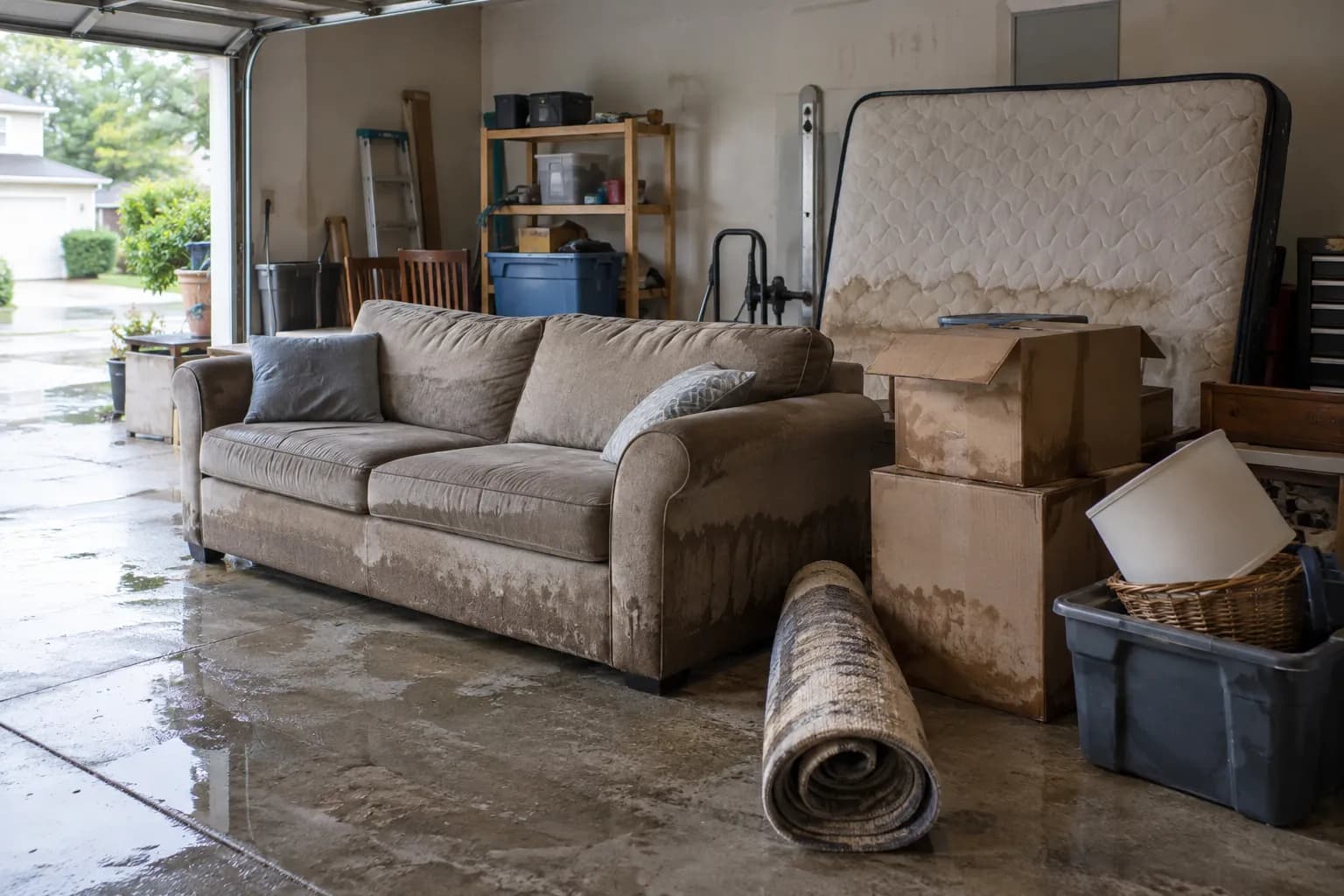
Some of the biggest financial losses after a hurricane don't come from the storm. They come from decisions made in the first week by exhausted people under pressure.
Put the work in the right order
- Hazards cleared or isolated: lines, gas, unstable trees.
- The building dried in: roof tarped, windows boarded.
- Wet materials out and drying started.
- Electrical system inspected before power goes back on in any flooded area.
- Debris sorted and either staged for public collection or hauled.
- Permanent repairs — after the adjuster's inspection and with written estimates in hand.
Hiring help: get it in writing
The Federal Trade Commission warns that after a disaster, demand for contractors far outruns supply — and that draws people who overcharge, do shoddy work, or take a deposit and disappear. Before anyone starts work:
- Get at least two written estimates when time and conditions allow.
- Verify the license for any work that requires one through your state's licensing board (listed at the end of this guide), and ask for a certificate of insurance showing general liability and workers' compensation. Call the insurance company on the certificate to confirm the policy is active.
- Insist on a written scope of work: exactly what will be removed, from where, where it will be disposed of, and what "finished" means.
- Agree on a payment schedule tied to completed work. Be wary of paying in full upfront, and avoid cash-only, wire transfers, payment apps, gift cards or cryptocurrency.
- Never sign your insurance check over to a contractor, and never let a contractor tell you what your policy covers. Ask your insurance company.
- Read anything called an "assignment of benefits" or "direction to pay" very carefully before signing. These can hand control of your claim, or your claim money, to the contractor. In Florida, assignments of post-loss benefits are void for residential and commercial property policies issued on or after January 1, 2023.
- Every one of these seven states has a law against price gouging during a declared emergency. If you're quoted a price that seems wildly out of line, report it to your state attorney general's office.
What you should expect from a professional storm debris company
A reputable company should be willing to:
- Look at the job in person or review photos and video before giving a price.
- Give you a written price — fixed, by truckload or volume, or by time — and explain how volume is measured.
- Spell out what's included: labor, loading, hauling, disposal fees, and handling of appliances and electronics.
- Tell you plainly what it won't take, such as hazardous waste or materials that may contain asbestos.
- Tell you honestly when your county or parish will collect the debris for free, and when hauling it makes more sense.
- Show proof of insurance.
- Leave the property in the condition the agreement describes, and give you an itemized invoice for your records and your insurance claim.
Insurance, FEMA and private services are three different things
Mixing them up is one of the most expensive misunderstandings after a storm.
- Insurance pays according to your policy. Debris removal may be covered as part of a covered loss, often with its own limit. Ask your insurer before you hire anyone.
- FEMA Individual Assistance is available only in counties and parishes included in a federal disaster declaration, only to eligible households, and can't pay for anything insurance already covers. After some recent hurricanes, FEMA offered a one-time Clean and Sanitize payment — up to $300 after Hurricanes Helene and Milton — for eligible primary homes that were damaged but safe to live in. Apply at DisasterAssistance.gov, through the FEMA app, or at 800-621-3362. FEMA staff carry photo ID and never charge you to apply.
- FEMA Public Assistance reimburses state and local governments for eligible debris removal from public roads and rights-of-way. It doesn't pay you or a private company you hire. Anyone who tells you to send their invoice to FEMA for reimbursement is very likely running a scam.
The U.S. Small Business Administration also offers low-interest disaster loans to homeowners, renters and businesses in declared areas.
Keep the paper trail going
Keep one folder — paper or on your phone — with claim numbers and adjuster contacts, your call log, all photos and video, your inventory, every receipt and invoice, every contract and estimate, before-and-after photos of finished work, and any permits or inspection reports. You may need it months from now for a supplemental claim, a flood claim appeal (the NFIP allows 60 days after a written denial), your taxes, or the eventual sale of the property.
What most hurricane cleanup guides don't tell you
- "The power's back" doesn't mean your house is safe to power. When the utility restores service to your street, flooded breakers, outlets and appliances inside your home can be energized too. If water reached your outlets or panel, keep the main breaker off — only if you can reach it without standing in water — until an electrician clears it. Electrical safety groups advise replacing breakers, GFCI and AFCI devices, outlets and switches that were underwater rather than drying them out. Saltwater makes the damage worse.
- A flooded house can stay dangerous after it looks dry. Wall cavities, subfloors and insulation hold water for days. Contaminated silt hides behind baseboards. A floor that feels solid can be rotting from below. "Dry" means measured with a moisture meter, not judged by hand.
- Some jobs should wait — on purpose. A tree on a roof may need a crane. A badly damaged building may need a building official's sign-off or a permit before it comes down. Suspected asbestos needs testing before anyone tears it out. In flood zones, many communities require a substantial-damage review before major repairs. Starting too soon can cost you money or create a code violation.
- The curb pile isn't a trash can. Mixed piles get skipped. Household trash tossed onto storm debris slows pickup for the whole street. And debris set out after the final collection pass can leave you paying for a haul you didn't need.
- Evidence leaves with the debris. Once a waterlogged sectional is in a landfill, your photos and samples are the only proof it existed. Thirty seconds with a phone before it goes out the door is the cheapest insurance you'll ever buy.
- You can pay twice for the same pile. It happens when a crew drags debris to the curb for free public pickup but bills you for hauling it away, or when a vague agreement lets a second visit be billed as new work. A written scope that says where the debris goes closes that gap.
- Older and vulnerable relatives need a different plan. If you're helping a parent, line up the work instead of letting them do it. Storm-chasing contractors often approach older homeowners directly; ask to be there when anything is signed.
- Landlords and vacation-home owners carry extra weight. Tenants need to know about hazards and when they can safely return, and your lease and state law may set your repair duties. If you're out of town, have a trusted local contact document and secure the property, and confirm in writing what any property manager is authorized to sign.
- Business owners should document lost operations, not just damaged property. Business interruption coverage, where it applies, usually depends on records of closure dates, lost revenue and extra expenses. Start that log on day one.
Ten costly mistakes property owners make after hurricanes
- Going back before reentry is allowed. Why it happens: worry about the house and about looting. What it costs: exposure to live lines, washed-out roads and gas leaks — and slowing down the crews trying to clear them. Do this instead: follow official reentry, and ask a neighbor who stayed or a local official for an update.
- Running a generator too close to the house. Why: convenience, rain, fear of theft. Cost: carbon monoxide poisoning, which in some recent seasons killed more people than storm surge. Instead: outdoors, 20+ feet from doors, windows and vents, with a battery CO alarm inside. Chain it to something solid if theft is the worry.
- Testing the electrical system to "see if it works." Why: the house looks fine and you need power. Cost: shock, fire and destroyed equipment. Instead: if water reached outlets, the panel or appliances, wait for a licensed electrician.
- Cutting trees that are under tension, on a structure, or near lines. Why: the tree is in the way and help is days out. Cost: serious injury, a bigger hole in the roof, electrocution. Instead: cut only what's on the ground and loose. Leave the rest to an arborist or the utility.
- Throwing things out before photographing them. Why: the smell, the mess, the need to see progress. Cost: a weaker insurance claim. Instead: photo, video, sample — then out it goes.
- Waiting for the adjuster before stopping more damage. Why: fear that touching anything will hurt the claim. Cost: mold, rot, and damage a policy may not cover because it could have been prevented. Instead: document, then make reasonable temporary repairs and keep the receipts.
- Making permanent repairs before the inspection. Why: wanting life back to normal. Cost: the adjuster can't see the original damage. Instead: temporary fixes now; permanent work after the inspection and written estimates.
- Hiring the first person who knocks. Why: relief, exhaustion, and a real shortage of help. Cost: inflated prices, unfinished work, lost deposits. Instead: check identity, licensing where it applies, insurance and references — and get it in writing.
- Paying to haul debris the county or parish would have collected for free. Why: not knowing the program exists, or when it ends. Cost: hundreds to thousands of dollars. Instead: check local collection rules first. Pay for hauling when the program won't take it, the job is urgent, or you can't wait weeks for a truck.
- Throwing everything into one pile. Why: speed and fatigue. Cost: a skipped pickup, and paying someone to re-sort it. Instead: six piles, with hazardous waste kept apart.
Questions to ask before you hire a storm cleanup company
Ask every company these questions — including us.
Who they are
What they'll do
What it costs
When it's done
How you'll get paid
Red flags
- Door-to-door offers with pressure to sign today.
- Claims of being "FEMA-approved" or "FEMA-certified." FEMA doesn't endorse private contractors.
- Promises that insurance or FEMA will pay for the whole job.
- Demands for cash only, wire transfers, gift cards, or your signed-over insurance check.
- Blank spaces in the contract, no physical address, or no local presence at all.
- Offers to "handle your claim," or pressure to sign an assignment of benefits on the spot.
What to photograph before debris removal
When to call a professional
Usually fine to do yourself — if you're physically able, the area is safe, and you have protective gear: picking up small limbs and yard debris; moving light, non-hazardous debris to the curb by local rules; carrying out soaked rugs and small furniture; bagging spoiled food; photographing everything.
Smart to hire help: large amounts of debris; heavy or bulky items like appliances, sectionals and waterlogged mattresses; full-room or whole-house clean-outs of flood-damaged contents; debris that has to be hauled rather than curbed; and anyone who's older, has health problems, or would be working alone in the heat. This is the work a storm debris and junk removal company is built for.
Call a qualified specialist:
Line down, tree on a line, sparking
- Who to call
- Electric utility
Gas smell or damaged gas meter
- Who to call
- Gas company or 911
Tree on the house, leaning trees, hanging limbs
- Who to call
- Arborist (ISA-certified when possible)
Shifted foundation, sagging roof or walls
- Who to call
- Building official or structural engineer
Wet panel, outlets, wiring or appliances
- Who to call
- Licensed electrician
Roof damage beyond a tarp you can place from the ground
- Who to call
- Licensed roofer
Wet walls, subfloors and framing
- Who to call
- Water-mitigation or restoration company
Mold over about 10 square feet, or vulnerable people in the home
- Who to call
- Mold remediation professional
Suspected asbestos or lead paint being disturbed
- Who to call
- Licensed abatement contractor and your state or local health agency
Flooded septic system or private well
- Who to call
- County health department; licensed septic or well contractor
Manufactured home moved off its supports
- Who to call
- Licensed manufactured-home installer or building official
State resources: the Carolinas, Georgia, Florida, Alabama, Mississippi and Louisiana
Bookmark your state's row. Emergency management agencies post reentry, shelter and debris information; insurance regulators handle complaints about claims; licensing boards let you check a contractor before you sign.
South Carolina
- Emergency management
- SC Emergency Management Division
- Insurance regulator
- SC Department of Insurance
- Contractor license lookup
- SC Department of Labor, Licensing and Regulation
North Carolina
- Emergency management
- ReadyNC / NC Emergency Management
- Insurance regulator
- NC Department of Insurance
- Contractor license lookup
- NC Licensing Board for General Contractors
Georgia
- Emergency management
- Georgia Emergency Management and Homeland Security Agency
- Insurance regulator
- Georgia Office of Insurance and Safety Fire Commissioner
- Contractor license lookup
- Georgia Secretary of State – Professional Licensing
Florida
- Emergency management
- Florida Division of Emergency Management
- Insurance regulator
- Florida Department of Financial Services
- Contractor license lookup
- Florida DBPR license search
Alabama
- Emergency management
- Alabama Emergency Management Agency
- Insurance regulator
- Alabama Department of Insurance
- Contractor license lookup
- Alabama Home Builders Licensure Board
Mississippi
- Emergency management
- Mississippi Emergency Management Agency
- Insurance regulator
- Mississippi Insurance Department
- Contractor license lookup
- Mississippi State Board of Contractors
Louisiana
- Emergency management
- Governor's Office of Homeland Security and Emergency Preparedness
- Insurance regulator
- Louisiana Department of Insurance
- Contractor license lookup
- Louisiana State Licensing Board for Contractors
National resources for every state: FEMA disaster assistance (800-621-3362) · NFIP flood claims (877-336-2627) · National Hurricane Center · SBA disaster loans · FTC fraud reporting
When Hurricane Junk Cleanup can help
Once the hazards are handled and the damage is documented, what's left is usually just heavy: waterlogged carpet and drywall, ruined furniture and mattresses, dead appliances, limbs and trees already on the ground, and piles that need to be sorted or hauled away. That's the work we do.
Hurricane Junk Cleanup handles:
- Interior clean-outs after storms — removing flood- and storm-damaged contents from homes, rentals, vacation properties and businesses, room by room.
- Storm debris removal — limbs, branches and downed trees that are already on the ground and clear of power lines.
- Furniture, mattress and appliance removal, including refrigerators, freezers, washers and dryers.
- Removal of torn-out materials like wet carpet and pad, drywall, flooring and insulation.
- Fence, shed and outdoor structure debris.
- Sorting and hauling, so debris goes where it belongs instead of sitting in your yard.
We don't do tree removal from houses or near power lines, electrical work, structural demolition, mold remediation, or asbestos and lead abatement — and we'll tell you who to call when your job needs one of them.
If you're not sure whether your debris can go to the curb for free public pickup, what needs to be separated, or whether you need a specialist before anyone hauls anything, contact Hurricane Junk Cleanup and tell us what you're looking at. We'll give you a straight answer — including when the right answer is that your county or parish will take it for free.
Frequently asked questions
How soon can I go back to my property after a hurricane?
When your county or parish lifts reentry restrictions — not when the wind stops. Check your local emergency management office for updates, and expect phased reentry in many coastal areas.
Can I turn my power back on after flooding?
Not until a licensed electrician has inspected any wiring, panel, outlets or appliances that were underwater, even if the utility has restored service to your street.
Should I wait for the insurance adjuster before I start cleaning up?
No. Photograph and video everything first, keep samples of damaged flooring, then make reasonable temporary repairs and remove wet materials to prevent more damage. Keep every receipt. Hold off on permanent repairs until the adjuster has seen the damage.
Does FEMA pay for debris removal on my property?
Generally, no. FEMA reimburses state and local governments for removing debris from public roads and rights-of-way. In some declared disasters, eligible households have received limited one-time cleanup assistance, but FEMA doesn't reimburse private haulers you hire.
How should I separate hurricane debris for pickup?
Usually into six piles: vegetative debris, construction and demolition debris, large appliances, electronics, household hazardous waste, and normal household trash. Your local rules decide the details, so check before you build the piles.
How fast does mold grow after a hurricane?
The CDC advises drying or removing wet materials within 24 to 48 hours. If a flooded home couldn't be dried in that window, assume mold is growing — and in Southeast heat and humidity, it doesn't wait.
What's a hurricane deductible?
A separate deductible that applies to hurricane or named-storm damage, usually 1% to 5% of your home's insured value. All seven states covered in this guide allow them. Your policy's declarations page shows yours.
How long do I have to file a flood insurance claim?
Report the loss right away. Under the standard NFIP flood policy, you must submit a signed proof of loss within 60 days of the flood.
Sources
- National Hurricane Center researchers, Recent trends in tropical cyclone fatalities in the United States (American Meteorological Society)
- CDC, Avoiding carbon monoxide poisoning and Dry off wet items after a storm
- CDC and federal partners, Homeowner's and renter's guide to mold cleanup after disasters
- FEMA, Keep your family and pets safe when using generators after a hurricane
- FEMA, Residents can clean storm debris from their property and Navigating your recovery: debris removal (Georgia)
- FEMA, Clean and Sanitize Assistance — Hurricane Helene
- FEMA, NFIP: file your flood claim
- National Weather Service, Turn Around Don't Drown
- EPA, Dealing with debris and damaged buildings
- OSHA, Hurricane eMatrix: tree trimming
- Alabama Department of Public Health, Safety precautions after storms
- Electrical Safety Foundation guidance via Safety+Health, Water-damaged equipment: replace or recondition?
- National Association of Insurance Commissioners, Navigating the claims process and Hurricane deductibles
- Florida Statutes, § 627.70132, notice of property insurance claim, and § 627.7152, assignment agreements
- Federal Trade Commission, How to avoid scams after weather emergencies and natural disasters